Why Millennials and Gen Z Respond Better to Real Families in Advertising
By the FAM | Florida Family & Kids Casting Experts
There is a shift happening in how brands connect with their most valuable audiences and the brands paying attention to it are pulling ahead of the ones that are not. The shift is not complicated. It comes down to one word: authenticity. And when it comes to family advertising specifically, authenticity has a very clear and very practical meaning. Real families outperform assembled ones. Every time.
This post breaks down why, what the data says, and what it means for how you cast your next campaign.
The Audience Has Changed. The Casting Has Not Kept Up.
Millennials are now between their late twenties and mid-forties. They are the dominant parent demographic, making household purchasing decisions across categories from baby products to travel to financial services to home goods. They are also the ones appearing in the campaigns they respond to most, which means a brand that casts a real Millennial family is speaking to a Millennial audience in the most direct possible way. Here is someone who looks like you, lives like you, and chose this brand.
Simply selling products will not get you to the heart of Millennial parents. They are seeking authentic and empathetic partners in parenting, partners that lead with their values and can contribute to the growth and optimization of their lives and family.
Gen Z is right behind them. Gen Z makes up 32% of the global population and by 2040 will represent the largest share of total consumer spending, not because individual Gen Z consumers are wealthy, but because as a cohort they will be the dominant working-age demographic as older generations move out of the market. The oldest Gen Z consumers are already parents themselves, and Gen Z moms are reshaping parenting culture and driving consumer trends, rewarding brands that reflect their lifestyle and values. Brands that build authentic family campaign infrastructure now are the ones positioned to speak credibly to this demographic as their share of the market grows.
These are not passive audiences who accept what they are shown. They are active, discerning consumers who have grown up in a fully digital environment and developed a highly refined ability to detect inauthenticity. The question for brands is not whether authenticity matters. It is whether their campaigns reflect it.
The Data Is Unambiguous
The consumer research around authenticity and brand trust points in one clear direction.
88% of consumers say authenticity is crucial when deciding which brands they support. 86% cite authenticity as a key reason they buy from certain brands. And 90% say transparency is essential when choosing a brand.
84% of consumers agree they buy from brands that share their values. 62% have an emotional connection to the brands they buy from most.
Research confirms that message authenticity directly influences consumers' attitudes and engagement intentions through emotion and brand warmth. Authentic ads evoke positive emotion, which in turn generates brand warmth, leading to a positive attitude toward the brand and increased intentions to engage.
Three-quarters of both Gen Z and Millennials are willing to pay more for a brand they trust, demonstrating that trust and quality remain paramount.
Nearly 53% of Gen Z say authenticity and transparency matter more than price when evaluating brands.
The through line across all of this is the same. These audiences are not evaluating products in isolation. They are evaluating the brands behind them, and the way a brand presents itself, including who it chooses to put in its campaigns, is part of that evaluation. A campaign that feels real, that features people who look and act like genuine families, earns the kind of emotional response that drives both purchase intent and long-term brand loyalty. A campaign that feels manufactured does the opposite.
What Real Family Casting Actually Means
There is a meaningful difference between a real family and an assembled one, and audiences feel it even when they cannot articulate it.
The traditional approach to family casting has been to pull individual models from separate talent pools, style them similarly, and coach them to perform warmth and connection on set. The result is content that looks like a family but does not feel like one. The interactions are slightly too smooth. The smiles are slightly too coordinated. The chemistry is professional rather than genuine, and to an audience trained on TikTok, Instagram Reels, and authentic creator content, that gap is immediately visible.
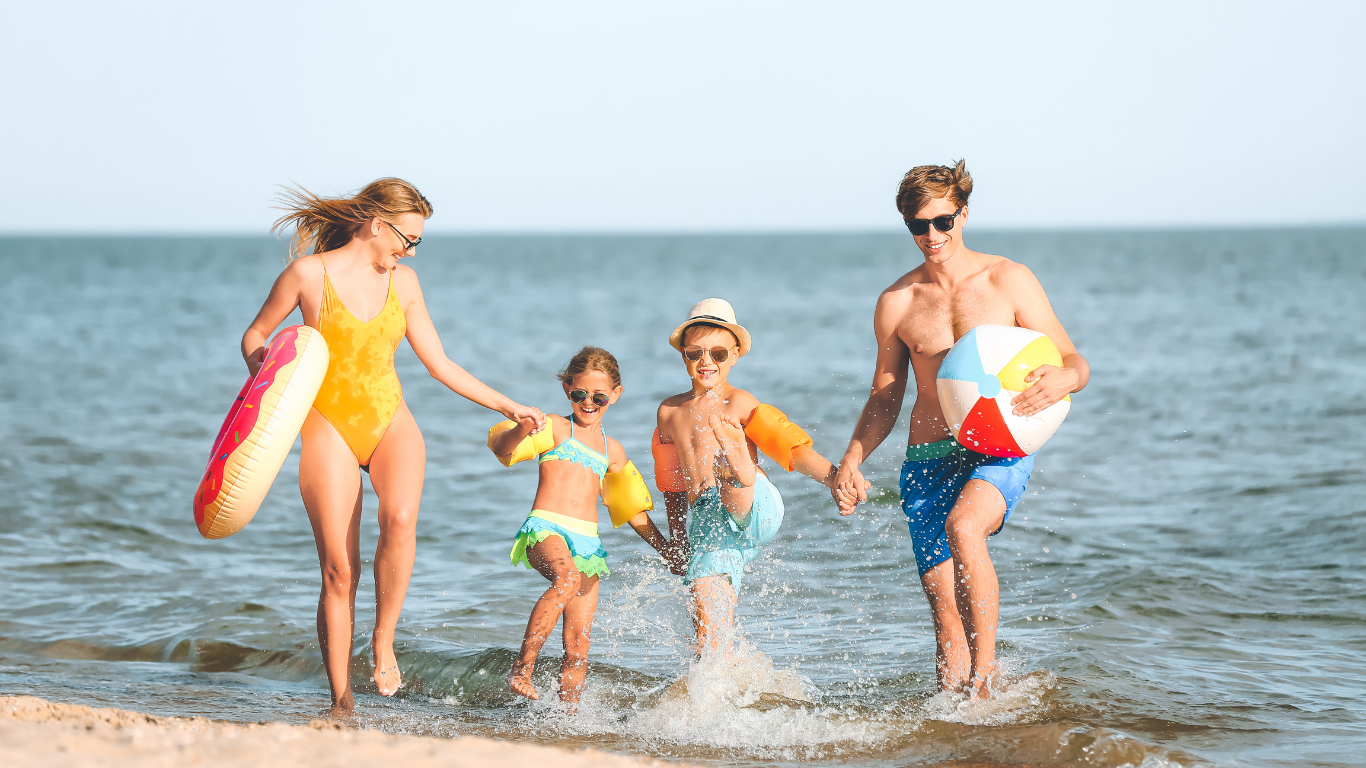
Real family casting means exactly what it sounds like. You are casting actual related families. A real mother and her real children. Real siblings. A real multi-generational family group. The chemistry is not manufactured on set because it already exists. The interactions are not coached because they are natural. When a brand commits to casting real families, they are not just making a stylistic choice. They are making a strategic one.
Millennial parents raised conscious collaborators who expect brands to earn their trust through authentic action. A campaign that features a real family delivers on that expectation in a way that assembled talent simply cannot.
Diversity Is Not Optional
Gen Z responds positively to campaigns featuring interracial families and diverse representation that goes beyond token gestures. Brands that practice performative activism face immediate callouts.
Real family casting addresses this naturally because real families are diverse. The families that exist in South Florida, across the country, and around the world are multicultural, multiracial, blended, extended, and varied in structure. Casting real families means casting the actual range of what families look like today, not a curated version of what marketing teams imagined families looked like twenty years ago.
Millennial parents are family-focused and appreciate marketing campaigns that celebrate the diversity and inclusivity of modern families. When the casting reflects that reality genuinely, audiences notice. And when it does not, they notice that too.
The Production Case for Real Families
Beyond the consumer psychology, there is a practical production argument for real family casting worth making explicitly.
Real families arrive on set with chemistry already established. The warmth between a parent and child, the dynamic between siblings, the ease of a family that has existed together for years does not need to be built or coached. It simply needs to be captured. Productions move faster, content reads more naturally, and the photographer is capturing rather than constructing.
The logistical case is equally strong. One family unit means one point of contact, one availability conversation, and one set of logistics to organize. Directing a real family toward a natural interaction is a fundamentally different task from directing five strangers to perform one. Real families already know how to exist together, which means less time building something artificial and more time capturing something genuine.
And some of the most powerful moments in family advertising simply cannot be directed into existence between strangers. A father kissing his daughter on the head as she heads off to school. A mom pulling her kid in for a spontaneous hug between shots. These are the moments that stop a scroll and build real brand warmth. They happen naturally between real families. Between strangers, you would not even think to ask for them.
What This Means for Your Next Campaign
If your brand markets to families and your casting process still relies on assembling individual models into a family unit, the data and the audience are both telling you the same thing. There is a more effective approach available and the brands embracing it are building deeper connections with the audiences that matter most.
Real family casting is not a niche approach. It is the direction the industry is moving and the brands leading that movement are the ones building lasting resonance with Millennial and Gen Z consumers who have made authenticity a non-negotiable standard.
At The FAM we specialize in exactly this. We represent real kids and families across Palm Beach County and South Florida for lifestyle, commercial, fashion, and e-commerce campaigns. When a brand comes to us with a brief, we match them with real families whose dynamic, look, and energy align with what the campaign needs. Not assembled talent performing connection. Real families with the kind of chemistry that cameras love and audiences trust.
If you are planning a campaign that needs real family talent, we would love to talk.