How to Practice Modeling at Home: A Guide for Kids and Parents
By The FAM | Florida Family & Kids Casting Experts
So, you've taken the digitals, submitted the application and started pursuing modeling opportunities. Now what?
One of the best things aspiring models can do between opportunities is practice.
That doesn't mean turning your living room into a photo studio or teaching your child a collection of poses. Modeling can involve everything from lifestyle and brand campaigns to e-commerce, product shoots and more traditional posed photography. Different jobs call for different skills.
A model may need to move naturally, interact with a product, create believable moments with another person, show personality, change expressions, hold a specific position or repeat the same action again and again.
The good news? Many of these skills can be practiced at home with nothing more than a phone and a little direction.
And if you're interested in participating in family modeling opportunities with your child, don't stay behind the camera every time. You should be practicing too.
Don't Just Teach Poses. Practice Taking Direction.
Learning how to pose is useful, but it shouldn't be the only thing your child knows how to do in front of a camera.
Professional modeling often requires talent to respond to direction in real time, whether they're being photographed or filmed.
Instead of always telling your child exactly where to put their hands or how to tilt their head, give them prompts:
"Walk toward me and look back."
"Show me your favorite thing in the room."
"Pick up that backpack and put it on."
"Whisper something funny to your sister."
"Pretend you just opened the best present ever."
"Turn to the side and hold there."
"Now do the same thing again, but slower."
The goal isn't necessarily to capture the perfect shot. You're helping them become comfortable listening, responding and adjusting while being photographed or filmed.
And don't overlook the basics. Good posture is the foundation of almost everything. Practice standing tall, sitting with intention and being aware of body position without becoming stiff or unnatural.
Depending on the job, talent may be asked to create natural lifestyle moments, hit and hold a clean pose for e-commerce, interact convincingly with a product or give a photographer or director several different options within seconds.
Being able to adapt is the skill.
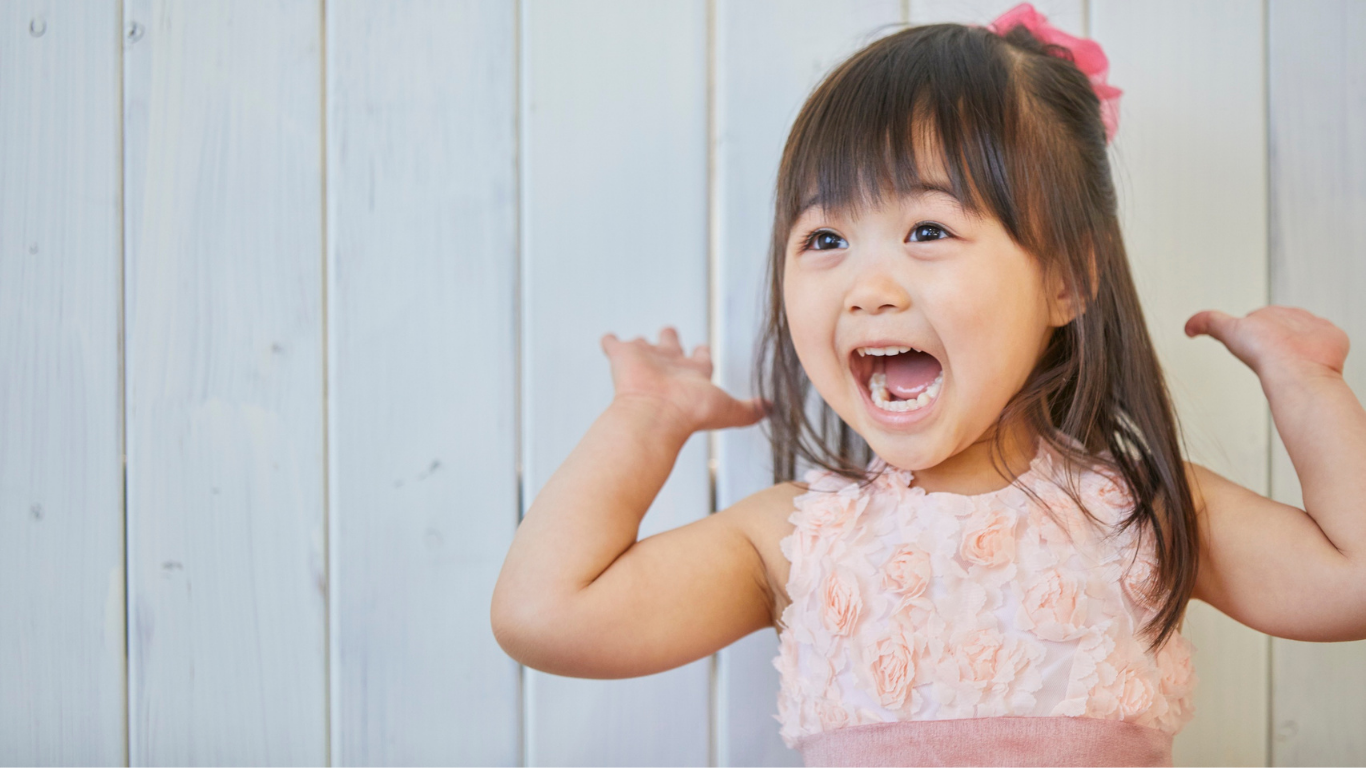
Practice More Than Smiling
Even smiling naturally in front of a camera is a skill worth practicing. Kids can quickly fall into a forced "camera smile," especially when they're asked to do it repeatedly.
Instead of only saying, "Smile," try getting a genuine reaction. Make them laugh, give them something to react to or ask them to think about something that naturally brings out their personality.
Then go beyond the smile.
Try different emotions and expressions:
Excited
Curious
Surprised
Thoughtful
Serious
Playful
Proud
Then practice controlling the intensity:
"Give me a big excited reaction."
"Now make it smaller."
"Do that again without looking at the camera."
"Now look directly at me."
"Hold that expression."
"Relax your face."
These little adjustments help develop range.
Some jobs call for big personality. Others need a cleaner, more neutral look. Talent should become comfortable moving between the two.
Practice Movement
Don't make every practice session about standing still.
Have your child practice:
Walking and turning
Running or jumping
Sitting down and standing up
Dancing
Reaching for something
Interacting with another person
Moving while holding or wearing a product
Then practice controlled movement too:
"Walk to this spot."
"Turn."
"Stop."
"Hold."
"Reset."
"Do it again."
Different jobs require different things. A lifestyle shoot may call for loose, natural movement, while an e-commerce shoot may require much more consistency from frame to frame.
Ask yourself: Can they stop in roughly the right place? Repeat a movement? Slow something down? Hold a position? Continue interacting naturally while listening to direction?
Those are real modeling skills.
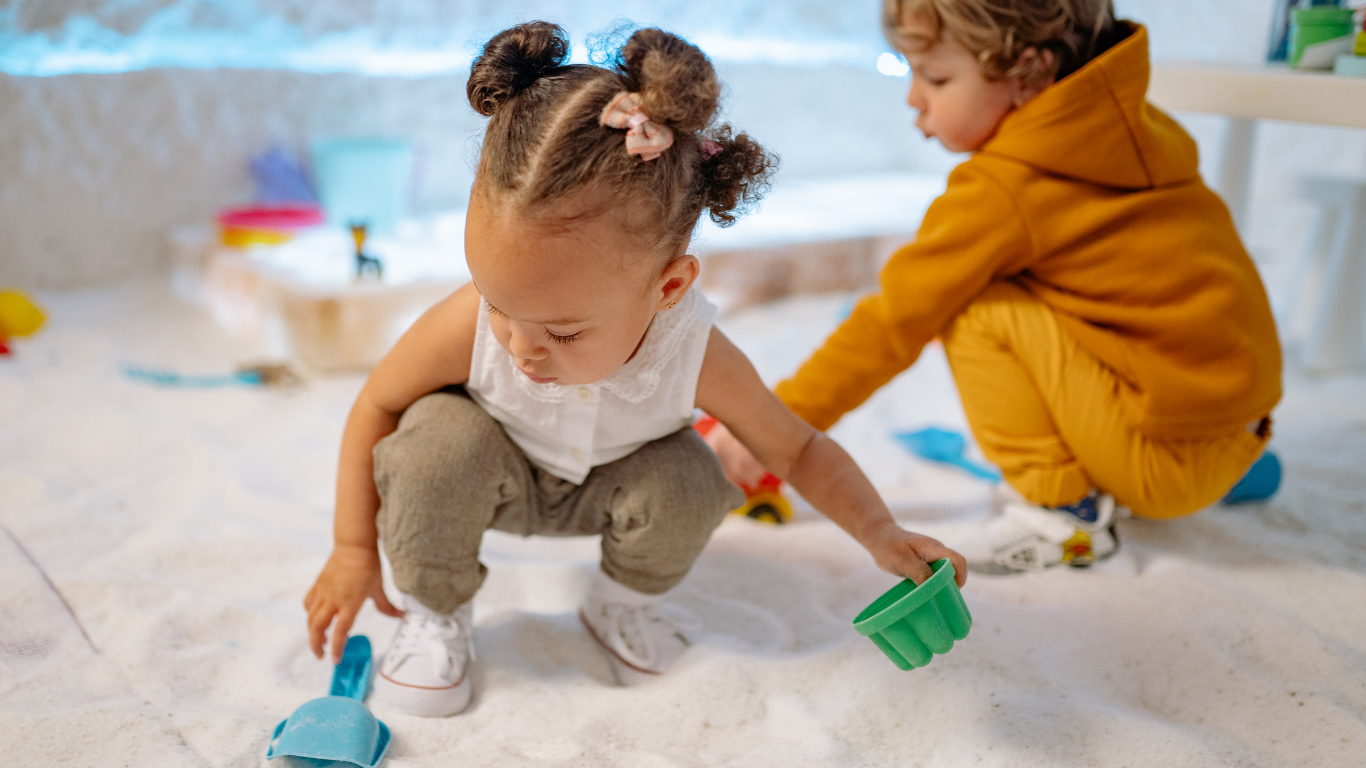
Practice Repeating What Worked
Imagine your child does something naturally and the photographer loves it:
"That was perfect. Do it again."
Can they?
One great moment may need to be recreated several times because the photographer needs another angle, the clothing or product needs adjusting, someone blinked or the client simply wants more options.
For e-commerce and certain product work, consistency can become even more important.
When your child gives you a great movement, expression or position, ask them to recreate it.
It doesn't need to be identical. The point is learning to understand what worked and deliver something similar again.
Give Them Something to Interact With
Models are often helping a brand tell a story or showcase something, so practice with everyday objects.
Try a:
Backpack
Pair of sunglasses
Book
Water bottle
Toy
Snack
Pair of shoes
Jacket
Instead of saying, "Hold this and smile," give them something to do with it:
"Open it."
"Put it on."
"Show it to me."
"Take a bite."
"Look inside."
"Hand it to your sibling."
"Walk with it."
"React to it."
You can also practice showing the product well. Can they hold something without covering it? Can they wear or interact with something naturally while still allowing the camera to see it?
The exact expectation depends on the job, but becoming comfortable working with products and clothing is useful across brand, lifestyle and e-commerce work.
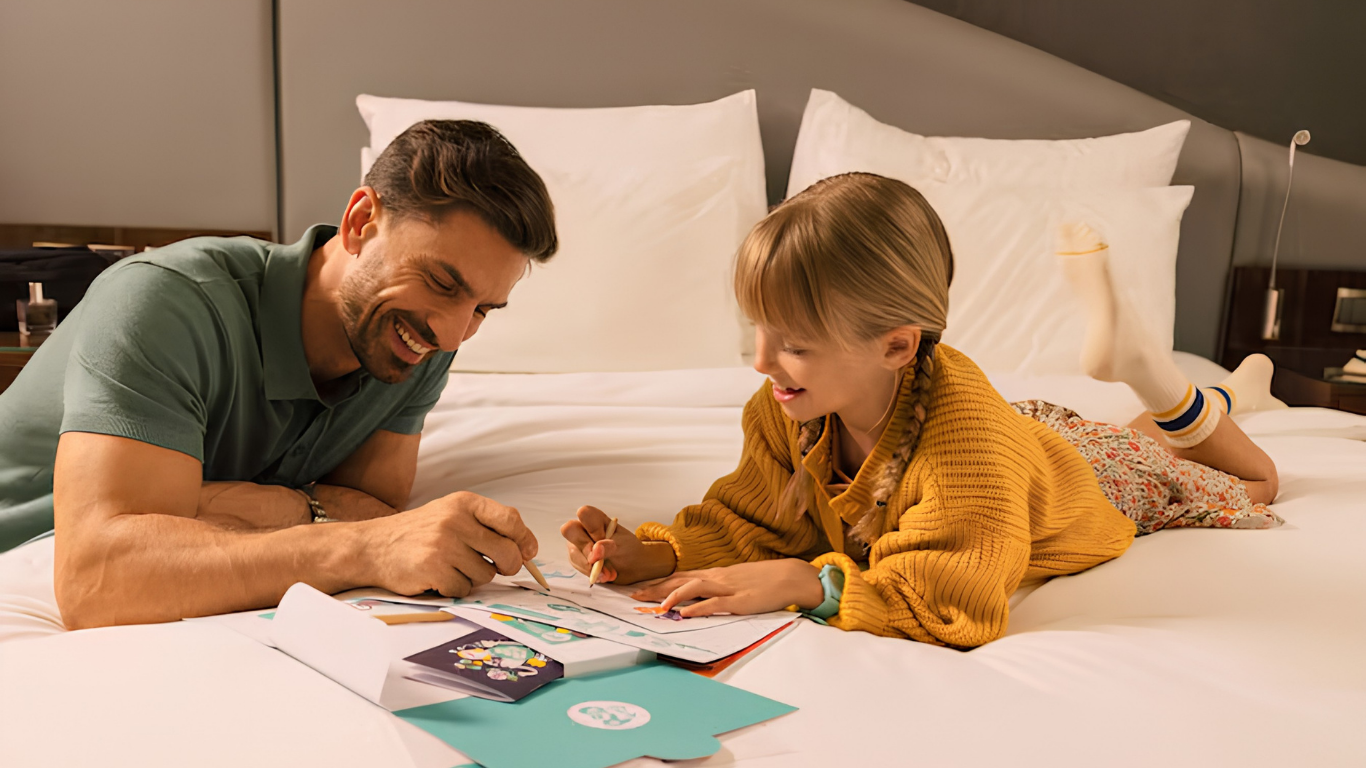
If You're Pursuing Family Modeling, Practice Together
Family modeling adds another layer because you're creating believable interaction while still responding to direction.
Real families already have natural chemistry. The challenge is keeping that interaction while adjusting for the camera.
Practice:
Walking together
Talking or laughing
Playing a simple game
Preparing food
Looking at something together
Interacting with a product
Then introduce direction:
"Everyone look at Dad."
"Kids, keep playing. Mom, look at them."
"Walk together, but don't look at the camera."
"Do that again, but stay closer together."
The goal is following direction without losing the natural interaction.
And parents, if you want to participate in modeling opportunities, you're talent too.
Get in front of the camera. Practice taking direction, movement, expressions, posture and interacting naturally with your family. The same skills you're helping your child develop apply to you.
Use Video Too
Your phone can be one of your best practice tools, and not every modeling or brand opportunity is still photography.
Record short videos as part of your practice. Then watch them back and pay attention:
Do they immediately look toward you for approval after every direction?
Do they freeze when they know they're being recorded?
Are their movements natural?
Can they hold a position?
Do they lose focus quickly?
Are they overperforming?
Watching video can reveal habits you might never notice in a single photograph.
You don't need to criticize every little thing. The goal is awareness, not perfection. Once you can see what you're doing, it becomes much easier to improve.
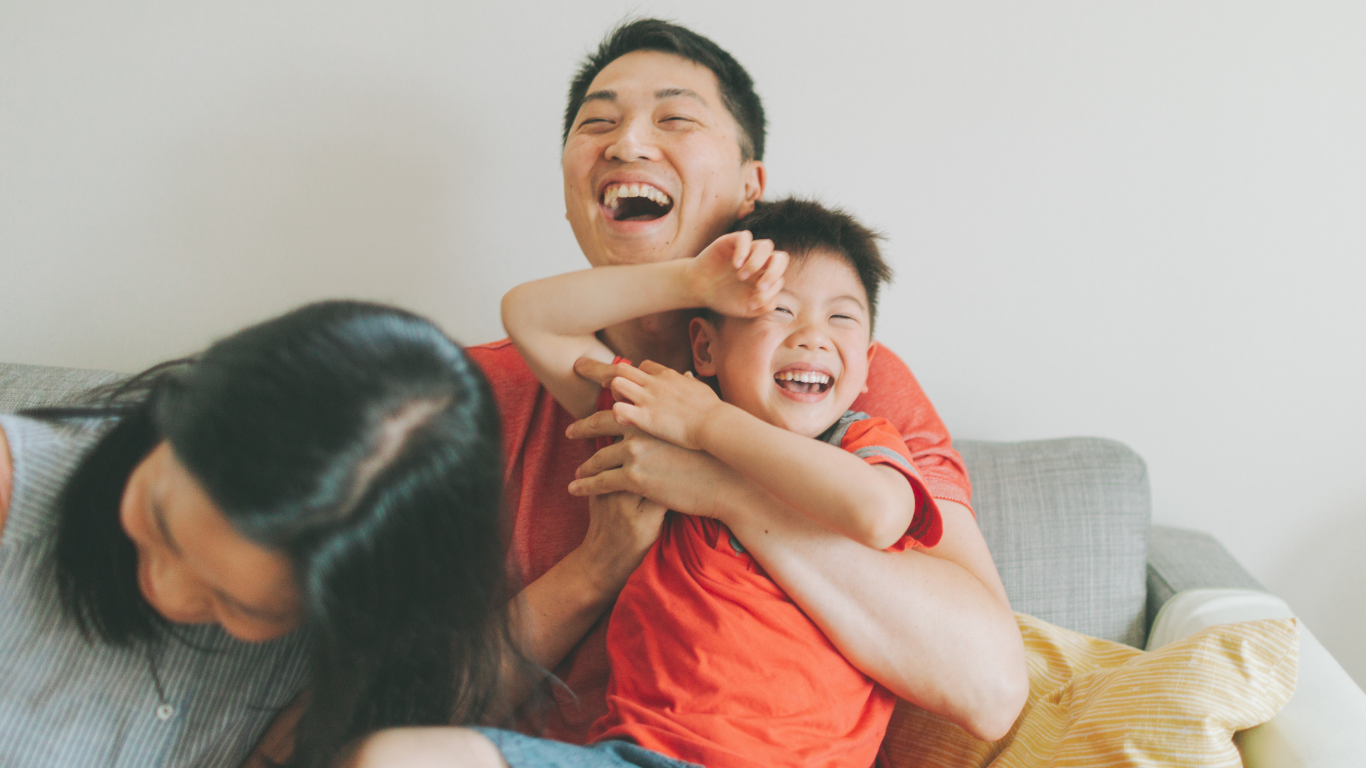
Study the Kind of Work You Want to Do
Practicing is only part of the equation. You also need to understand what you're practicing for.
Look at current lifestyle campaigns, e-commerce websites, brand photography, catalogs, advertisements and professional video content featuring kids and families.
Don't just look at whether you like the finished image. Study what the talent is actually doing.
Pay attention to:
How a child models clothing for e-commerce versus a lifestyle campaign
How they're holding or interacting with a product
Whether they're looking at the camera or interacting with someone else
Whether the shot requires movement or a clean held position
How much personality they're showing
How families interact with one another
What makes the finished moment feel believable
You'll quickly see there isn't one universal way to "model."
Different jobs require different things. That's why range, adaptability and the ability to take direction matter.
Take Advantage of the Resources Already Available
There is more modeling education available online than ever before.
Aspiring talent can learn from reputable modeling agencies, photographers, casting professionals, working models and production professionals who share educational and behind-the-scenes content.
Look for:
Posing and movement exercises
Photography demonstrations
Interviews with working talent and industry professionals
Casting discussions and educational content
Behind-the-scenes footage from real shoots
Professional portfolios
Current e-commerce, lifestyle and brand campaigns
Use those resources.
Follow photographers who shoot the types of work you're pursuing. Study agencies in your market. Look at the portfolios of working models. Pay attention to current advertising.
Just be selective about who you're learning from. A large social media following doesn't necessarily mean someone understands professional modeling.
Use The FAM as a Resource
We don't expect talent to arrive at The FAM already knowing everything about the modeling industry.
Part of what we're building is a place where aspiring talent can learn as they grow.
Our educational content, webinars, portfolio opportunities and casting guidance are designed to help you better understand the industry, strengthen your materials and become more prepared for professional opportunities.
But don't make us your only resource.
Follow reputable agencies and photographers. Watch behind-the-scenes footage from real productions. Study current campaigns and e-commerce imagery. Look at the portfolios of working talent.
The more you understand the industry, the easier it becomes to recognize what you're working toward.
Keep Practice Fun
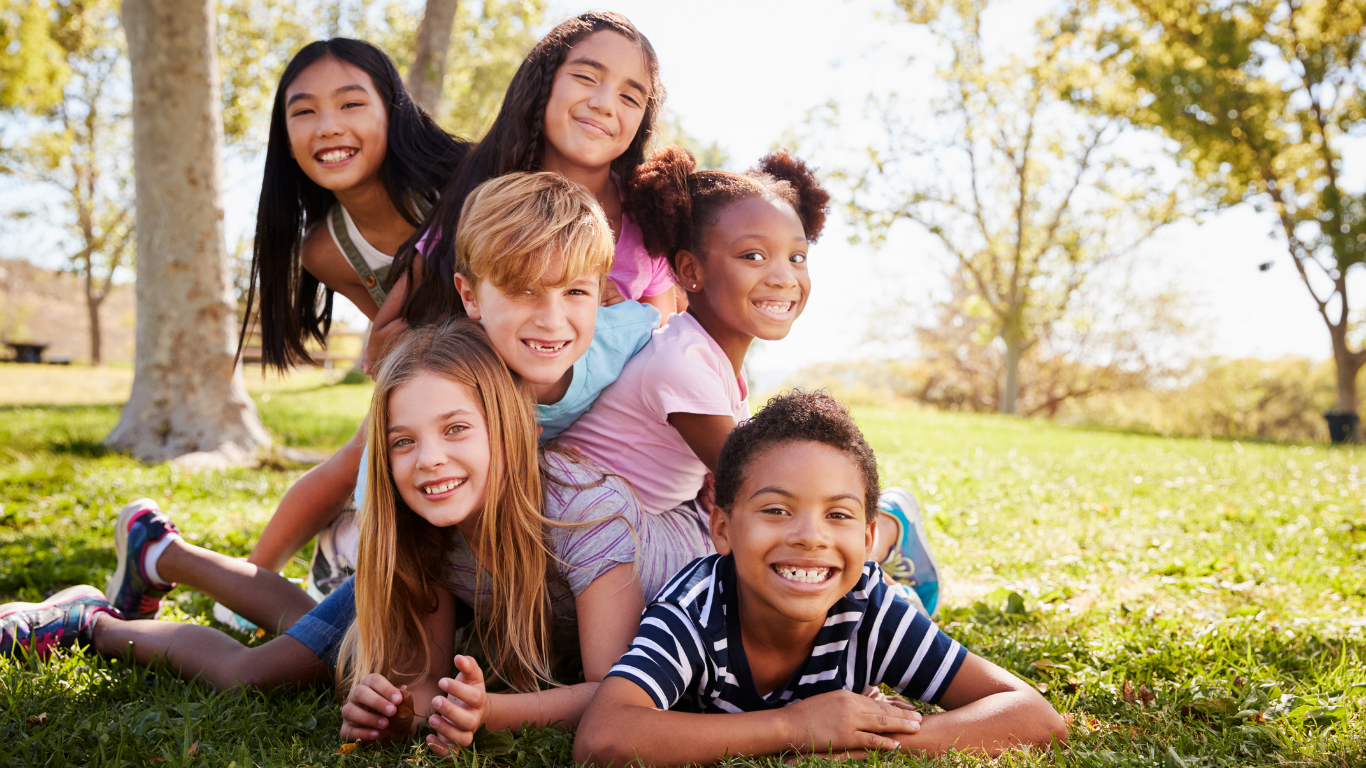
Especially with younger children, practice shouldn't feel like work.
You don't need hour-long modeling sessions. Ten minutes of playful prompts every once in a while can be far more productive than constantly correcting a child's every movement or expression.
If practice becomes entirely about doing things "right," you risk creating the opposite of what you're trying to achieve: a child who becomes stiff, overly aware of the camera or worried about making a mistake.
Let them move. Let them experiment. Let them be silly.
Give direction, see how they respond and make it enjoyable.
You're not trying to manufacture a perfect little model. You're helping your child become comfortable, responsive and adaptable in front of a camera.
The Goal Is Preparation, Not Perfection
You don't need professional equipment at home. You don't need to practice every day. And your child doesn't need to memorize a collection of poses.
Focus on the fundamentals:
Listening
Posture
Posing and holding
Movement
Expression
Interaction
Repetition
Understanding the industry
Different jobs will ask for different things. The goal isn't to teach one way to model. It's to become comfortable enough in front of a camera to listen, adapt and deliver when the opportunity comes.
You don't need to turn your living room into modeling school. You just need to treat modeling like something worth learning.